
Dialing Within Massachusetts and the Phone Codes You Use
The everyday rule in Massachusetts is ten digits. Since April 2, 2001, local calls in the eastern overlay regions have required the area code plus the seven digit number, and the state has never gone back. Western Massachusetts is technically outside that requirement, but ten digits is still the safe habit everywhere, because mobile phones, VoIP systems, saved contacts, and published listings all carry the full number anyway. Long distance sometimes wants a leading 1 depending on the carrier and the plan.
Every Massachusetts call fits one of a handful of patterns. Knowing which pattern applies is most of what dialing knowledge amounts to.
| Call Type | Phone Code Format | Example Shape |
|---|---|---|
| Local within Massachusetts | Ten digits, area code plus seven | 617-727-7030 |
| Long distance within the country | 1 plus ten digits | 1-413-784-1376 |
| Toll-free | 1 plus a toll-free prefix plus seven | 1-800-392-6090 |
| International from a landline | 011 plus country code plus number | 011 plus the destination number |
| International from a mobile | Plus sign, country code, then the number | Long press zero for the plus sign |
| Service shortcut | Three digit N11 code | 211 for community services |
Important: A seven digit local call will not connect in the eastern overlay regions. Dial the area code every time, even to a neighbor.
N11 Service Phone Codes in Massachusetts
N11 codes are the three digit shortcuts, and Massachusetts puts most of them to work. Some reach national services. Some reach a state program run specifically for residents here. Two of them, 511 and 211, connect to services people rarely think about until they need them badly.
| N11 Phone Code | What It Reaches in Massachusetts |
|---|---|
| 211 | Mass 211 for community services and benefits, also reachable at 877-211-6277 |
| 311 | Municipal non-emergency services in cities that run one, notably Boston at 617-635-4500 |
| 411 | Directory assistance through your carrier, usually for a fee |
| 511 | Mass511 traffic and travel information, also reachable at 857-368-4636 |
| 611 | Your own phone company, not a state office |
| 711 | MassRelay, with TTY at 800-439-2370 and Spanish TTY at 866-930-9252 |
| 811 | Dig Safe, called before any excavation so utilities can be marked |
| 911 | Police, fire, and medical emergencies |
| 988 | Suicide and Crisis Lifeline, by call, text, or chat |
The travel code is worth a closer look, since Mass511 covers cameras, incidents, and travel times as well as a phone line.
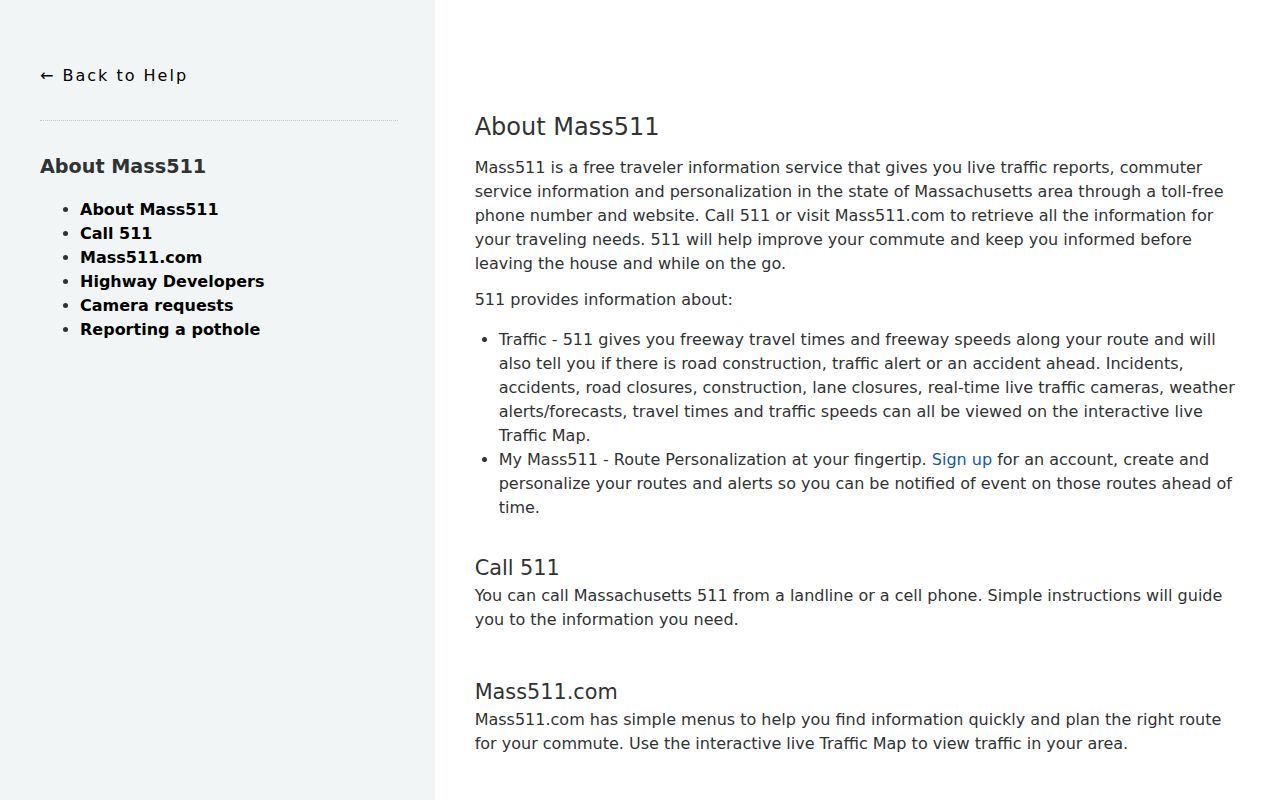
Its alternate number spells 857-DOT-INFO, which is easier to recall in a snowstorm than a string of digits.
Crisis routing has more depth than a single code suggests. Alongside 988, the state publishes a list of specialized hotlines covering behavioral health, abuse reporting, and other targeted services.
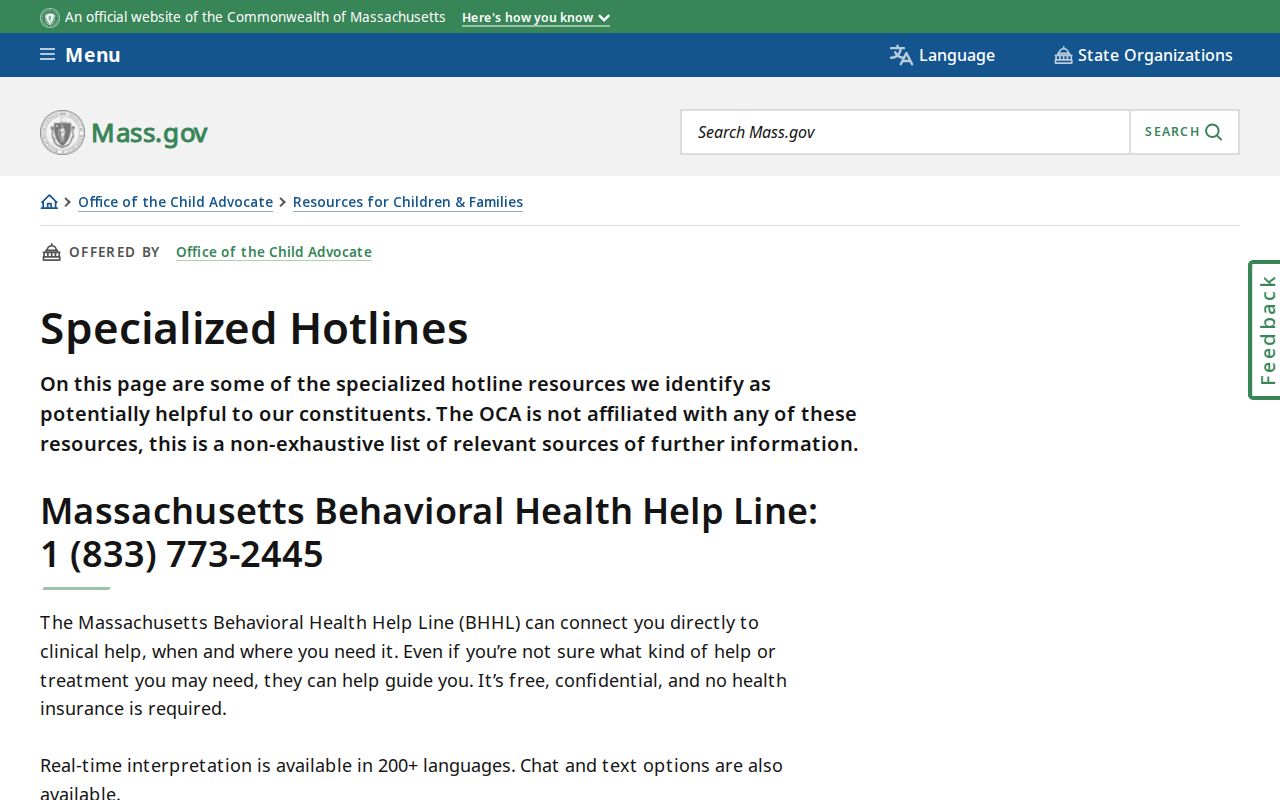
The Behavioral Health Help Line at 833-773-2445 sits on that list and handles treatment connections rather than acute crisis.
Note: 311 is not statewide, so a caller outside Boston should check whether their own city runs a service line before relying on that code.
Star Phone Codes on Massachusetts Lines
Star codes are the small commands that change how a call behaves. They came from the landline era and still work on many Massachusetts wireline and VoIP services, though support varies by carrier and some do nothing at all on a mobile phone. Dial the code before the number when the code applies to an outgoing call. Test one before you count on it.
| Star Phone Code | Action |
|---|---|
| *57 | Call trace, used after a threatening call and followed up with the carrier or police |
| *60 | Selective call block for specific numbers |
| *67 | Hide your caller ID for the next call only |
| *69 | Return the last incoming call |
| *70 | Turn off call waiting for one call |
| *72 | Turn on call forwarding, then dial the forwarding number |
| *73 | Turn off call forwarding |
| *77 | Reject anonymous callers |
| *82 | Show your caller ID for the next call on a blocked line |
| *86 | Reach voicemail on many carrier systems |
Call trace deserves a caution. Activating *57 records the origin of the last call in the carrier system, but the result goes to the carrier or to law enforcement, not to you. It is a step in a report, not a lookup.
The Area Phone Codes Serving Massachusetts
Area codes are phone codes too, just the geographic kind. Nine are in service across Massachusetts in five regions, and four of them are overlays sharing ground with an older code. For dialing purposes they behave identically. What they signal is where a number was first issued, which is a weaker clue than most people assume once portability enters the picture.
- 413 - western Massachusetts, in service since 1947 and never overlaid
- 617 and 857 - Boston and the close-in communities, with 857 added in 2001
- 781 and 339 - the suburban ring outside Boston, with 339 added in 2001
- 508 and 774 - central and southeastern Massachusetts plus the Cape and islands, with 774 added in 2001
- 978 and 351 - north central and northeastern Massachusetts, with 351 added in 2001
Town by town coverage, the split history, and the boundary oddities all live on the Massachusetts area code coverage page.
Toll-Free and Premium Phone Codes
Toll-free prefixes look like area codes but carry no geography at all. The called party pays for the call instead of the caller. Each new prefix arrived because the previous one ran out of numbers, which is why the set keeps growing. Massachusetts agencies use them heavily, from the citizen information line to the elections line to the benefits and health programs.
| Toll-Free Phone Code | Rolled Out |
|---|---|
| 800 | 1967, the original |
| 888 | 1996 |
| 877 | 1998 |
| 866 | 2000 |
| 855 | 2010 |
| 844 | 2013 |
| 833 | 2017 |
Premium codes run the other direction. A 1-900 number bills the caller at a rate the service sets, and 976 has a similar history at the local level. Neither shows up in legitimate Massachusetts government contact information, so a caller pushing you toward one is worth hanging up on.
Some Massachusetts toll-free lines spell words, which makes them easier to remember. Elections uses 1-800-462-VOTE. The Address Confidentiality Program at the Secretary of the Commonwealth uses 1-866-SAFE-ADD.
Country Code 1 and Calling Out of Massachusetts
Massachusetts sits inside the North American Numbering Plan, which uses country code 1 for the United States, Canada, and about two dozen other territories. That code almost never gets dialed inside the country. It matters when a call crosses a border in either direction, and it is the reason a Massachusetts number written for an international audience appears as +1 followed by the ten digits.
- Calling abroad from a Massachusetts landline: dial 011, then the destination country code, then the local number.
- Calling abroad from a mobile in Massachusetts: press the plus sign, then the country code, then the number.
- Calling a Massachusetts number from abroad: dial the exit code for that country, then 1, then the ten digit number.
The plus sign method works from almost any modern handset and saves the trouble of remembering which exit code applies where you happen to be standing.
Local Exchange Phone Codes in Massachusetts
The middle three digits of a Massachusetts number are the exchange code, sometimes called the central office code. Those blocks were handed out to rate centers, which are billing areas that grew up around real switching buildings. Massachusetts rate centers still carry familiar names, including Boston, Cambridge, Brookline, East Boston, Worcester, Springfield, Lowell, Lawrence, New Bedford, Fall River, Brockton, Framingham, Barnstable, and Pittsfield.
Traces of that system survive in public Massachusetts listings. State government clusters on 617-727 and 617-722. The education agency runs 781-338 with a four digit extension on the end. State Police headquarters uses 508-820. Public health uses 617-624, and the utilities regulator uses 617-737. Campus numbers follow the same idea, with UMass Boston on 617-287, UMass Lowell on 978-934, UMass Dartmouth on 508-999, and UMass Chan on 508-856.
Number portability weakened all of it. A line can keep its exchange code while moving to a completely different carrier, so a free exchange lookup is a starting clue and nothing stronger. Directories that list an office by name remain the reliable route, and the Massachusetts phone number directories page covers where those live.
Spam Labels and Caller ID Authentication
The label on an incoming Massachusetts call comes from two systems working together. Caller ID authentication, known as STIR/SHAKEN, lets phone companies validate that a call really came from the number it claims as it passes between networks. Separately, carrier analytics score calling patterns and attach a warning such as Likely Spam or Scam Likely. Neither system proves anything on its own. A flagged call can be legitimate, and a clean call can be a scam placed from a rented number or a compromised account.
Massachusetts codes offer no protection here. A spoofed call can wear 617, 413, or any other familiar code just as easily as an unknown one. When calls slip through, the FCC Consumer Complaint Center takes reports about unwanted calls, texts, spoofing, and labeling problems.
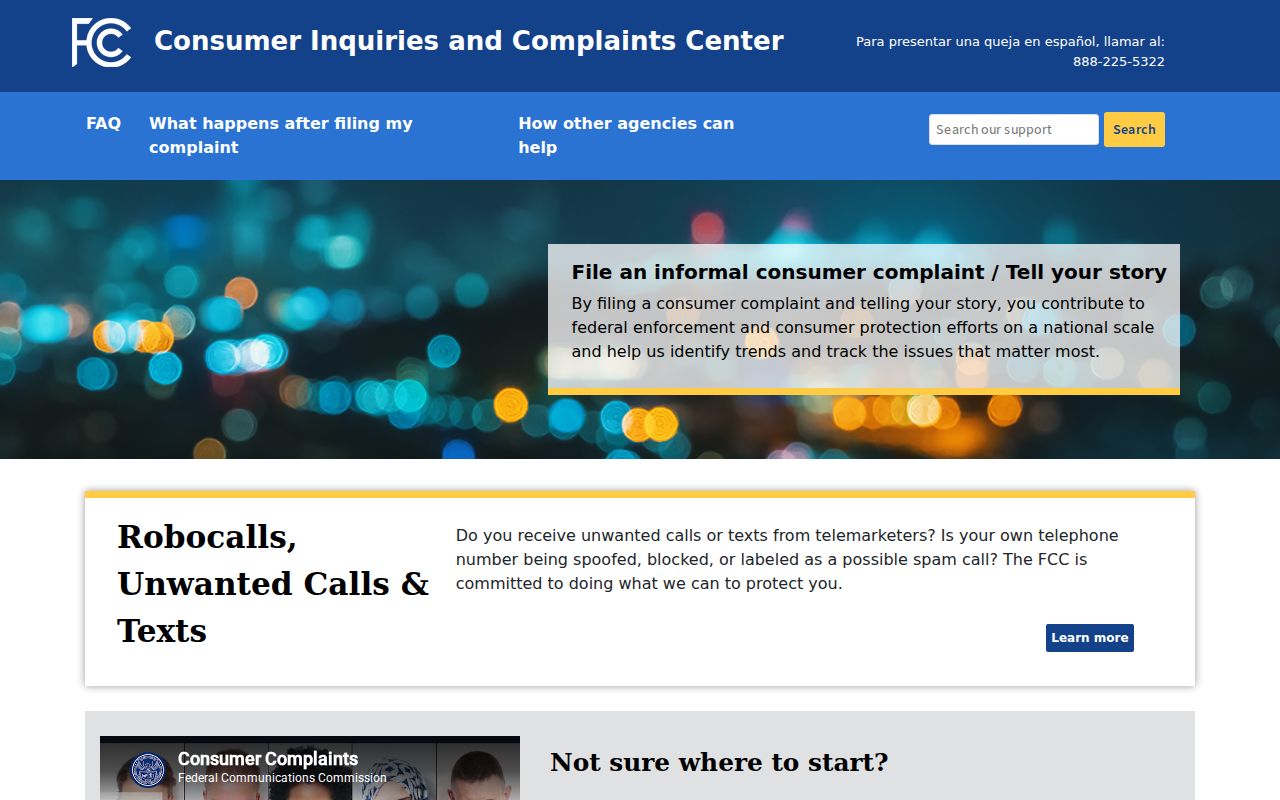
The phone category there separates unwanted calls from spoofing of your own number, which are handled differently.
For telemarketing specifically, the National Do Not Call Registry handles both registration and reporting, and it also takes registrations by phone at 1-888-382-1222 with TTY at 1-866-290-4236.
Web registrations need an email confirmation within 72 hours, which is the step most people forget.
Phone Codes That Reach Consumer Help
Two Massachusetts numbers do most of the work when a call turns into a dispute rather than a nuisance. The Attorney General runs a consumer hotline at 617-727-8400, staffed weekdays from 8 to 4, for unfair or deceptive business practices. The consumer complaint page explains what to gather before calling.
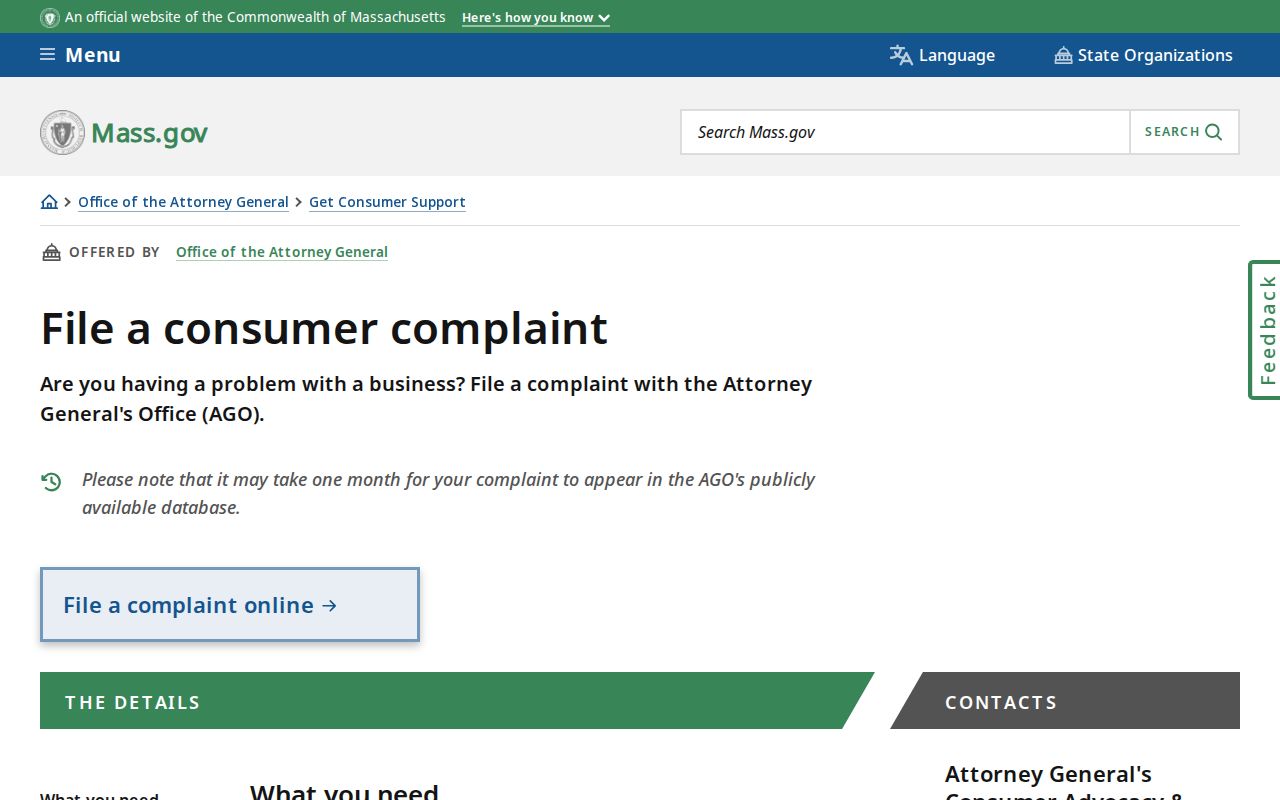
Bring the business name, the calling number, any contract or bill, and a note of what payment was demanded.
Anything involving a gas, electric, or water company goes elsewhere. The Department of Public Utilities consumer division answers at 617-737-2836 or 877-886-5066, and its utility complaint process accepts an online form, a phone call, an email, or a fax.
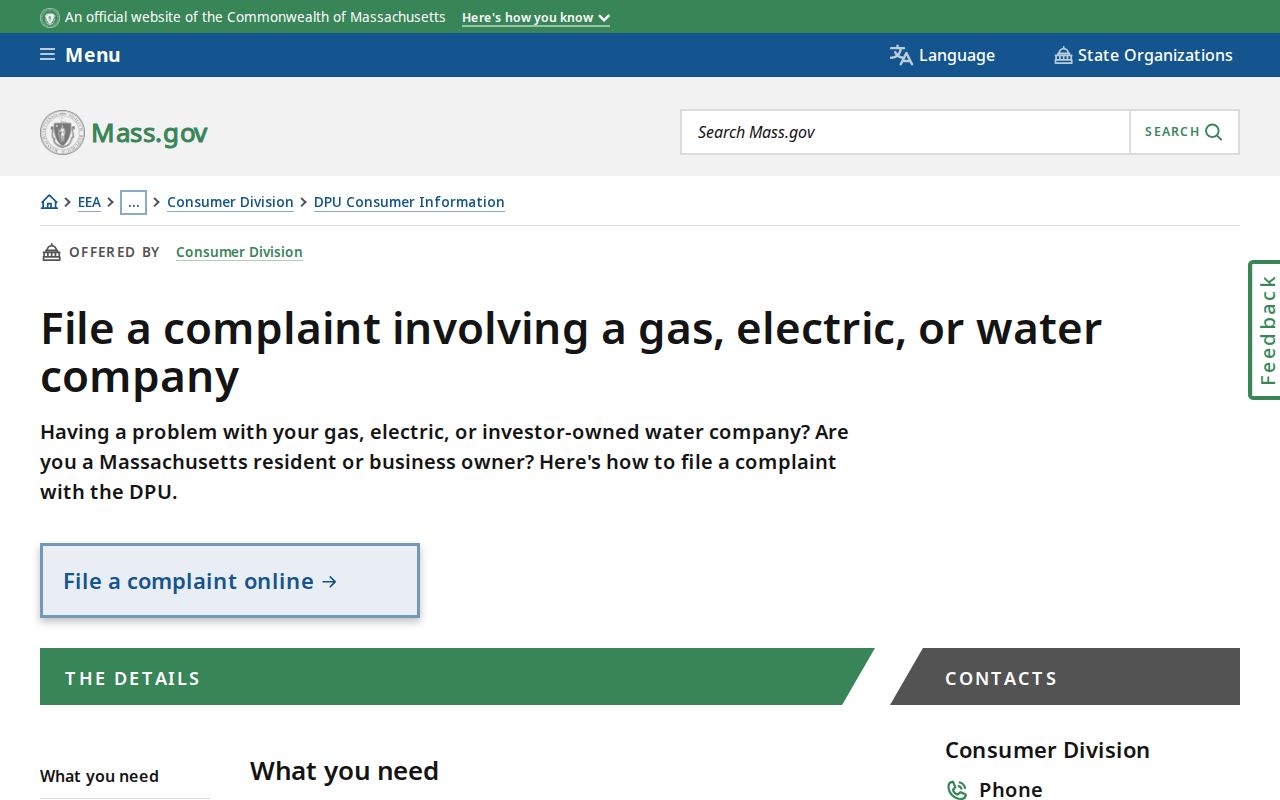
Shutoff threat calls claiming to be a utility belong in that queue, since the regulator tracks impostor patterns across companies.
Accessibility Phone Codes in Massachusetts
One short code carries the whole Massachusetts accessibility system. Dialing 711 from anywhere in the state connects a caller to MassRelay, which links people who are deaf, hard of hearing, late deafened, or speech disabled with any other phone user. Direct numbers exist alongside it for people who prefer them.
- 711 - relay access from any Massachusetts phone
- 800-439-2370 - TTY line, also used as the education agency TTY number
- 866-930-9252 - Spanish language TTY service
- 711 - the TTY route published by MassHealth and the Health Connector for member services
- 617-371-1903 - the 24 hour TTY line for water and sewer emergencies
State agency contact pages name that service directly, which is a good sign that a relay call will be handled without argument.
Massachusetts Phone Code Definitions
A few terms come up constantly in numbering material, and they are simpler than they sound.
- NPA
- Numbering Plan Area, the three digit area code at the front of a number.
- NXX
- The exchange or central office code, meaning the three digits after the area code.
- N11
- The three digit service codes, from 211 through 988.
- Vertical service code
- A star command that changes how a call is handled on your line.
- Toll-free prefix
- A code that shifts the cost of the call to whoever is being called.
- NANP
- The North American Numbering Plan, the country code 1 region that Massachusetts belongs to.
- STIR/SHAKEN
- The caller ID authentication framework carriers use to validate calls between networks.
How to Check a Massachusetts Phone Code
Verifying a Massachusetts phone code takes two sources. For a geographic code, the state list settles which city or town it covers. For anything technical, including whether a code exists at all and which rate center a block belongs to, the national numbering records are the authority. Between the two, almost any code question resolves in a couple of minutes.
Note: carrier support for star codes varies, so a code that works on a landline may do nothing on a mobile or VoIP line from a different provider.